

There’s a special mailbox tucked into a quiet walking trail in quaint Hinesburg, Vermont. For more than a decade, its origin story was unknown. In 2020, the person who originally installed it finally fessed up.
It was Barry Lampke. He’d been missing the connection he had shared with his father before his death. They used to write letters to each other. That’s how they bonded. So, Barry began writing again, leaving his letters in this mailbox with “DAD” painted on the side. Soon others were leaving notes and even some blank journals, inviting more entries–messages of love, longing, and gratitude as well as stories of the weight of living alongside grief.
I finally visited the area with a friend who was mourning a recent loss. As we approached the mysterious mailbox, it looked both ordinary and remarkable. It was ordinary because it’s like any mailbox you’d see along any roadway, but it was remarkable because it’s in the middle of a field on the side of a trail, set back against some brush.
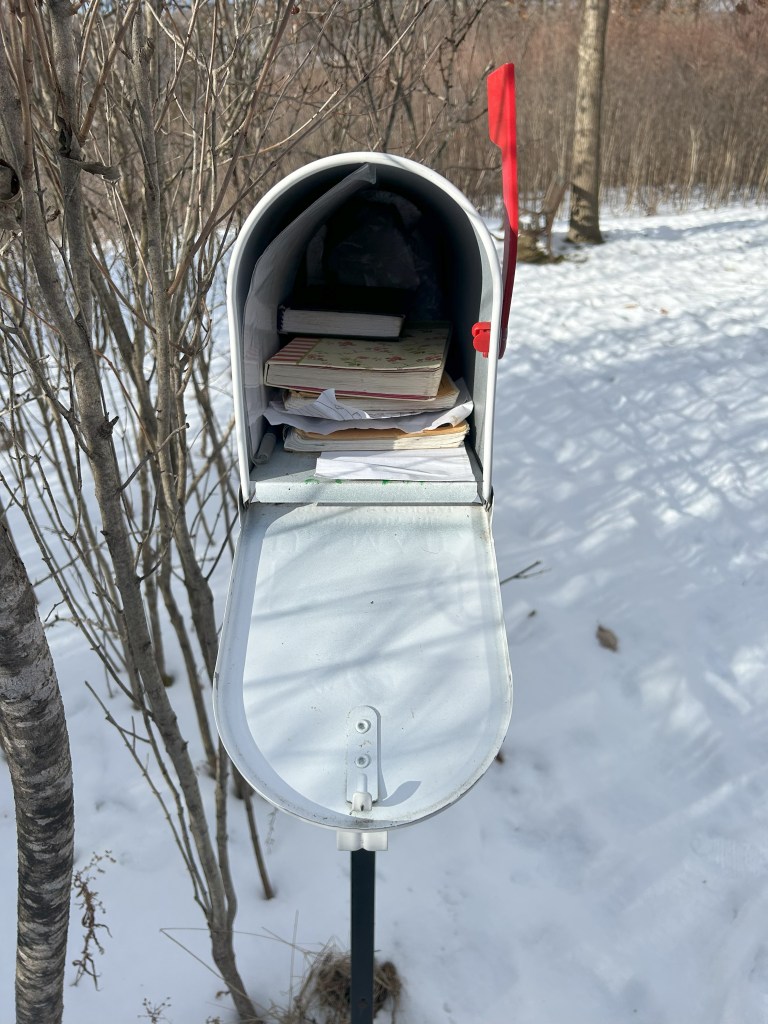
I wanted to open it and see what was inside, but felt an unexpected hesitation. Was I intruding? Grief can be such an intimate space of vulnerability. But this was a memorial of sorts in a public place. It welcomed visitors… and even contributors.
This was a repository of ongoing communication–an invitation for continued connection.
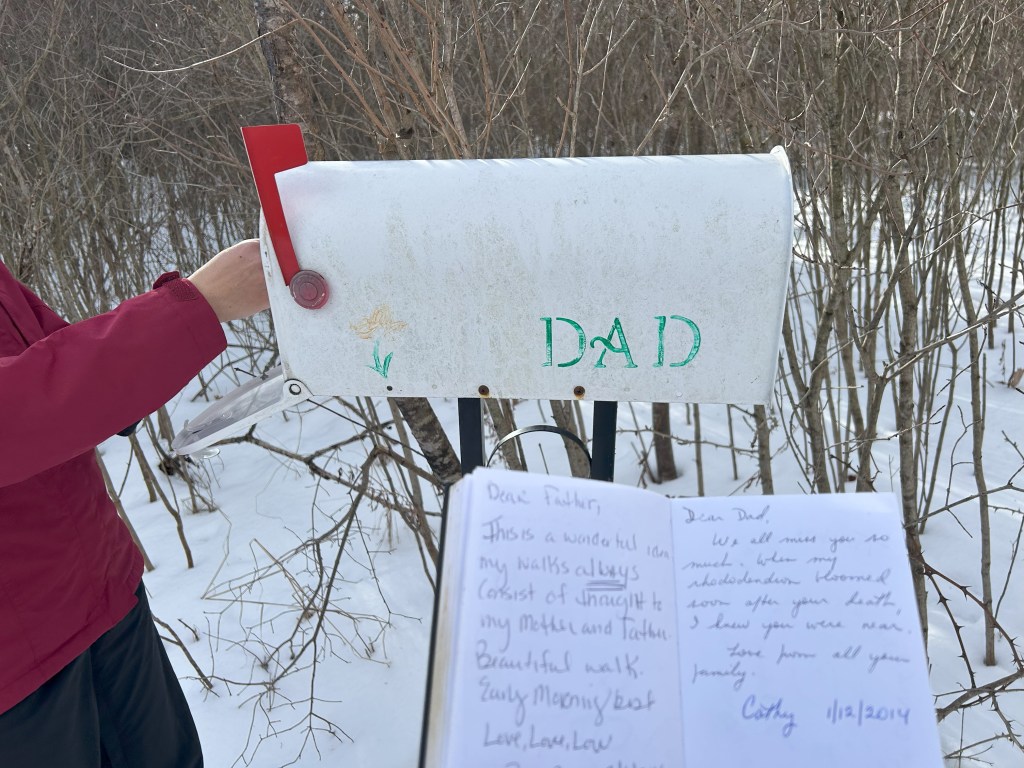
Healthy connections don’t necessarily have to end with death, and many mourners find ways to maintain an ongoing attachment. In 1996, researchers Klass, Silverman, and Nickman, introduced their theory of “continuing bonds,” which named and validated the desire held by many mourners to remain connected somehow to those who have died. “Holding onto items, daily habits, private rituals, conversations with your loved one, visiting places where you feel close to them, thinking about them… These are all ways people continue bonds with deceased loved ones.”1
People grieving the loss of a loved one often have a good idea about how their person would continue to respond to them, because that voice lives on in their mind. Neuroscientist and author, Mary-Frances O’Connor, says she finds it “marvelous and comforting that the brain does this—creates this physical part of ‘we’ to carry forever.” She goes on to explain, “The world is also perceived through our brain, and our brain is shaped by the love we shared, so our world [still] contains them. We interpret what we see, how we act, and our capacity to love, because our brain carries them forever.”2
Words Gone Unspoken
As someone who works within the realm of loss, I know how heavily unspoken words can weigh down a broken heart. It’s never too late to express them, though. In this situation, a supportive prompt might be: I know it’s not the same as actually having your person back, but if you could have five more minutes with them, what would you say or do? If mourners don’t feel comfortable expressing it aloud, they can speak or write directly to their deceased. Then, they could decide to ceremoniously burn or bury any writing in a ritual of releasing, or add to a journal they’ll keep.
This can be cathartic for past loving relationships as well as for processing difficult dynamics and stuck emotion.

A grief support client of mine recently told me they have an ongoing dialog with their person within the notes app of their phone. They type out memories (before time can make them fuzzy) and add to a list of reasons their person would be proud of them as they experience new accomplishments.
How beautiful and healing.
Of course, there is no replacement for the presence of a lost beloved. There’s no magical cure for the anguish of a painful goodbye. Yet, the living are tasked with living. Living despite heartbreak. Living around grief. Living with loss. Somehow, someway. So why not try and utilize any beneficial action that can provide a measure of solace?
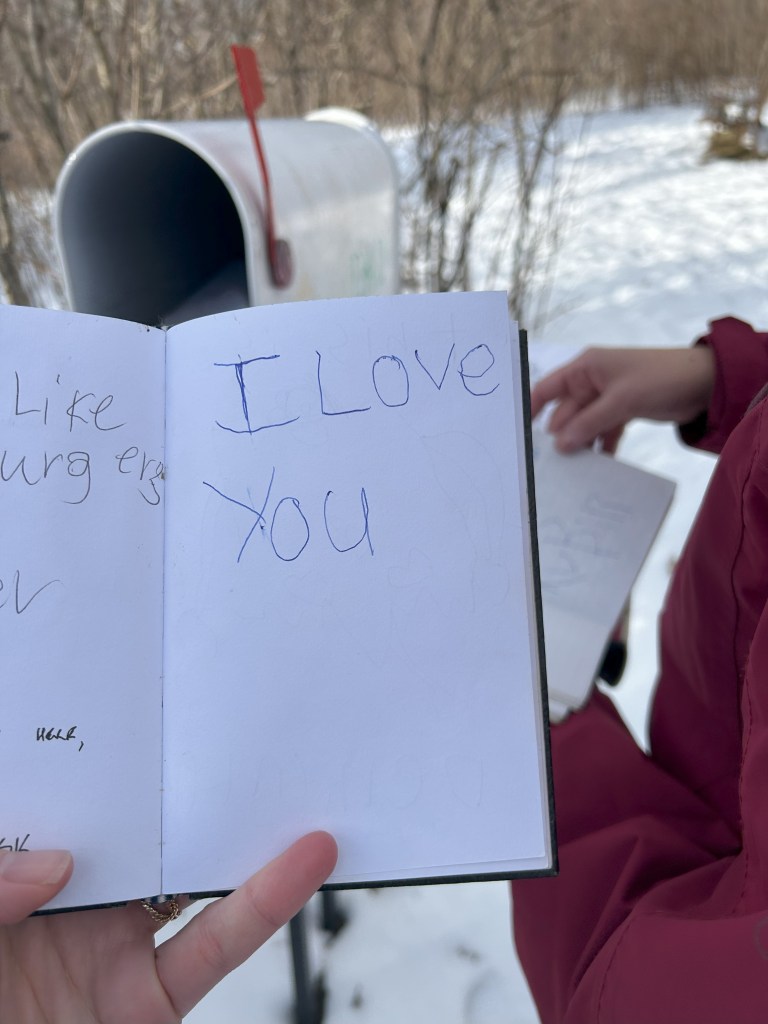
While you have the time and energy, consider writing down what’s on your mind and in your heart. Whether your words are directed at those who’ve gone before you or those alive today, they can reflect you and honor your enduring connection.
Here’s a helpful guide to get you started:
CBS news story:
References:

 Francesca Lynn Arnoldy