

Death illiteracy is a significant social and public health challenge. Our difficulty in accepting our mortality, combined with a reluctance to plan for life’s eventual end, can lead to unnecessary suffering and isolation. However, by improving our individual and collective understanding of death, we can take meaningful steps to foster a greater sense of connection and preparedness.
What is Death Literacy?
Death literacy means providing people with the information and support needed to navigate the end of life, which requires an awareness of “death systems.”
“Death systems are defined as the means by which death and dying are understood, regulated, and managed in a society. They include and involve several components – including people (e.g. health and social care practitioners, funeral workers, religious leaders), places (e.g. hospitals, hospices, mortuaries, cemeteries), times (e.g. death anniversaries and remembrance days), symbols and rituals (e.g. last prayers) and more.”(source: Marie Curie)
What is the Goal of Death Literacy?
The goal of death literacy is to re-humanize dying by bolstering societal fluency, personal agency, and self-efficacy.
- Fluency: A developed language for sharing and learning about the end of life
- Personal agency: Empowered, informed self-determination
- Self-efficacy: Courage in one’s own ability to contemplate mortality and confidence to navigate care choices
Who are Death Literacy Educators?
Death literacy educators are advocates who guide and encourage people to contemplate mortality, live fully, and prepare for their eventual last days.
- We acknowledge and honor loss and death as natural, complex parts of the human experience.
- We encourage and create space for meaningful conversations about life, death, and grief.
- With knowledge and sensitivity, we embolden people to live fully and die supported.
- We are deathkeepers.
Improved death literacy can lead to stronger connections, less fear, and more personalized care.
Curious to learn more?
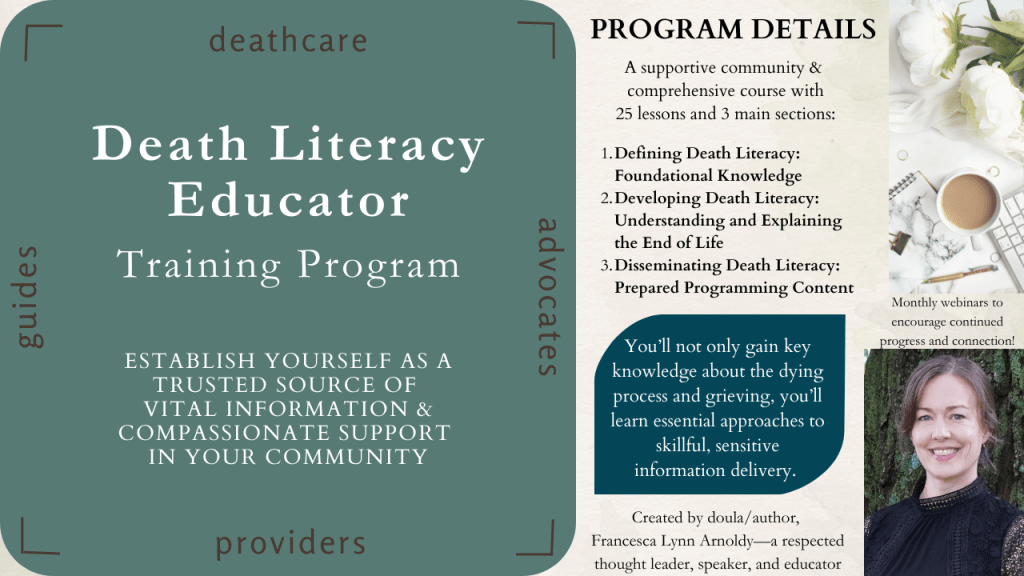

 Francesca Lynn Arnoldy